

EU rail regulations: what rights do you have as a train passenger in the EU?
5 min read
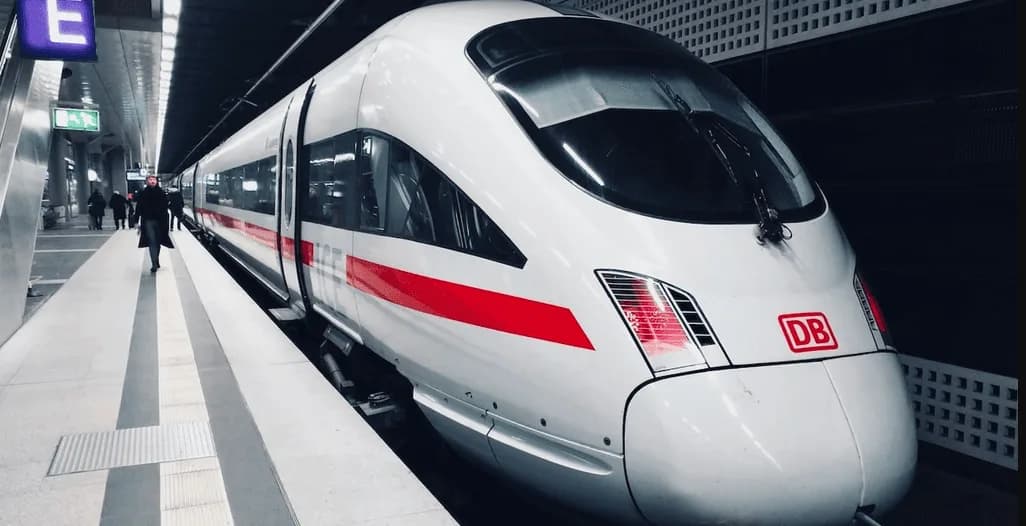
We explain how EU regulations protect you on the railways.
Most people know they're entitled to compensation if their flight is delayed. But did you know there's a similar, and in some respects even stronger, European law for trains? That law is called Regulation (EU) 2021/782 and it sets out the minimum that railway companies must do for you when your journey goes wrong. In this article we explain exactly what the EU regulations on rail transport involve, how much compensation you can get, and what NS adds on top of that in the Netherlands.
Which EU law governs rail transport?
The European rules for rail transport are laid down in Regulation (EU) 2021/782 on the rights and obligations of rail passengers. This regulation has applied since 7 June 2023 and replaces the older Regulation 1371/2007. The rules apply to all national, regional and international train services within the European Union, but not to trams, the metro, light rail or fast trams. In the Netherlands, the Human Environment and Transport Inspectorate (ILT) oversees whether railway companies such as NS and Arriva comply with these European rules.
Want a broader overview of what this means for you as a passenger? Then also read our article about your rights when your train is delayed.
Your most important rights under EU 2021/782
The regulation gives you, as a rail passenger, a number of concrete rights. Let's go through them one by one.
The right to information
Railway companies and station managers are required to actively inform you during your journey about delays, disruptions, connections and safety issues. Is your train delayed or cancelled? Then the carrier must immediately let you know what's going on and what your rights are. You must also be informed about your rights under the regulation when you buy a ticket.
The right to compensation for delays
Under Regulation (EU) 2021/782 you're entitled to compensation of at least 25% of your ticket price for a delay of 60 to 119 minutes, and 50% for a delay of 120 minutes or more. The minimum amount is €4. The railway company must pay out the compensation within 30 days. At your request, this must be paid in money, not just in vouchers.
| Delay | EU minimum compensation |
|---|---|
| 60 to 119 minutes | 25% of the ticket price |
| 120 minutes or more | 50% of the ticket price |
| Minimum amount | €4 |
The right to assistance during a long delay
Do you have to wait longer than 60 minutes? Then you're entitled to free meals and drinks, in proportion to the waiting time. If the delay means you need an overnight stay because there are no more trains running, the railway company must arrange and pay for a hotel and the transport to get there. The cost of letting people who are waiting for you know what's happening (think of a family member waiting to pick you up) can also be reimbursed.
The right to alternative transport: the 100-minute rule
This is one of the most important additions in the regulation, and at the same time one of the least known. If the railway company doesn't offer you an alternative within 100 minutes of the scheduled departure of your delayed or cancelled train, you're allowed to arrange alternative transport yourself without prior permission. The carrier is then required to reimburse the "necessary, appropriate and reasonable" costs. This rule applies if you arrive at your final destination at least 60 minutes late. The official explanation from the European Commission on Your Europe goes into more detail on this.
The right to a refund or rerouting
Are you expecting a delay of 60 minutes or more? Then you have a choice:
- Continue your journey via the planned or an alternative route, as quickly as possible.
- Travel later on a date that suits you better.
- Money back: you cancel the journey and get the full ticket price (or the unused portion) back. If the delay means you need a free return trip to your point of departure, you're entitled to that too.
Rights regarding luggage and mobility equipment
If your registered luggage arrives late, gets damaged or is lost, you're entitled to compensation. The same goes for a wheelchair or other mobility equipment. Passengers with a disability or reduced mobility are also entitled to free assistance at the station and on the train.
When are you not entitled to compensation?
We like to be honest: not every delay entitles you to money back. There are situations in which the carrier doesn't have to pay out anything. Since the 2023 revision, these force majeure grounds have been described more strictly:
- Extreme weather conditions where train traffic is halted for safety reasons
- Major, well-announced strikes beyond the carrier's control
- Incidents involving people or objects on the track that the carrier has no influence over
- A delay that demonstrably originated outside the EU (for example in a non-EU country along the route)
Important: the burden of proof lies with the carrier. We often hear that claims are wrongly rejected under the label "force majeure." If in doubt, you can request justification or bring the complaint to the ILT.
An international train journey: what if you have multiple tickets?
When travelling across borders, you often buy several separate tickets from different carriers. That makes things more complicated when you miss a connection. There's a good chance you'll be helped by the Agreement on Journey Continuation (AJC): more and more railway companies have signed up to it and will then let you take a later connecting train after all. Carriers such as Eurostar, Deutsche Bahn (ICE), SNCF (TGV) and ÖBB Nightjet all fall under Regulation 2021/782 and must apply at least the EU compensation thresholds.